
The twelve-bar blues forms a backbone of modern music. This foundational progression shapes everything from classic blues to contemporary rock songs. Understanding this twelve-bar pattern opens doors to countless musical opportunities.
Blues music emerged from African American communities in deep South during late 19th century. Musicians created this structure from work songs, field hollers, and spiritual traditions. This format became standardised by 1920s, appearing in recordings by artists like Robert Johnson and Bessie Smith.
What is the 12 Bar Blues?
A twelve-bar blues represents a specific chord progression lasting exactly twelve measures (bars). This pattern repeats continuously throughout a song, creating a predictable framework for both rhythm guitar and improvisation. Musicians worldwide recognise this structure as essential knowledge.
Background and History of the 12 Bar Blues Form
This twelve-bar format developed organically within blues communities across Mississippi Delta. Early blues musicians needed a simple, memorable structure that allowed for both vocal expression and instrumental variation. This progression provided a perfect balance between structure and creative freedom.
By 1930s, the twelve-bar pattern had spread throughout America via travelling musicians and radio broadcasts. Artists like Muddy Waters and B.B. King later electrified this traditional format, influencing generations of guitarists. Today, this progression appears in jazz, rock, country, and pop music.
Its popularity stems from its mathematical simplicity and emotional depth. Twelve bars divide evenly into three sections of four bars each, creating natural breathing spaces for vocals and instrumental phrases.

Understanding I, IV, and V Chords (The Core Building Blocks)
This twelve-bar blues uses three primary chords based on scale degrees. In a key of A, these become A major (I), D major (IV), and E major (V). These Roman numerals indicate the chord’s position within major scale.
A I chord represents “home” – its tonal centre where phrases naturally resolve. IV chord creates slight tension, moving away from home. V chord builds maximum tension, demanding resolution back to the I chord. This tension-and-release cycle drives blues forward.
These three chords contain all seven notes of major scale. This comprehensive harmonic coverage explains why the progression sounds complete and satisfying. Beginning guitarists can master these shapes quickly, making blues accessible to players of all levels.
The Essential 12 Bar Blues Progression Explained for Guitarists
A standard twelve-bar pattern follows a specific chord sequence over exactly twelve measures. Each measure typically contains four beats, creating forty-eight total beats per cycle. This consistent structure allows musicians to communicate without written music.
Standard 12-Bar Blues Pattern (Frame-by-Frame Breakdown)
Bars 1-4: Play I chord for four complete measures. This extended stay on tonic establishes the key firmly. Many beginners rush this section, but patience here creates musical tension.
Bars 5-6: Switch to IV chord for two measures. This change provides harmonic contrast and prepares for return home. IV chord shares notes with I, creating smooth voice leading.
Bars 7-8: Return to I chord for two measures. This brief homecoming feels satisfying after the IV chord’s departure. Musicians often add melodic embellishments during this section.
Bars 9-10: Move to V chord for two measures. This creates maximum harmonic tension within progression. V chord contains leading tone, which pulls strongly toward the I.
Bars 11-12: Final two measures typically use V-I or I-I, depending on song’s requirements. V-I ending creates strong resolution, while I-I provides smoother continuation into the next cycle.
Memorizing Form: A Quick Tip from PrivateGuitarLessons
Count measures aloud while playing: “One-two-three-four, two-two-three-four, three-two-three-four, four-two-three-four.” This counting system helps internalise twelve-bar structure. Practice with a metronome set to 120 beats per minute (approximately 2 beats per second) for steady timing.
Create mental landmarks at bars 5, 9, and 12. These represent harmonic changes that break progression into manageable sections. Many guitarists visualise the pattern as three four-bar phrases rather than twelve individual measures.

Does the 12 Bar Blues Always Use the Same Structure?
The fundamental structure of the 12-bar blues (I-I-I-I, IV-IV-I-I, V-V-I-I) remains consistent, but musicians frequently modify the progression for variety. Common variations include:
- Quick Change (Quick to Four): Switches to the IV chord in the second measure (I-IV-I-I…).
- Chord Substitutions: Jazz musicians often replace basic triads with complex chords. You might consult an easy jazz chords chart to learn how to substitute dominant seventh chords (e.g., A7, D7) to create a more ‘bluesy’ feel.
- Length Variations: The progression can be extended to sixteen bars or compressed to eight bars for different lyrical/melodic needs.
How to Play the 12 Bar Blues on Guitar (Rhythm & Chords)
Beginning guitarists should start with open chord shapes in easy keys like A, D, or G major. These keys utilise open strings, reducing finger stretches and allowing focus on rhythm patterns. Advanced players often prefer barre chords for moveable shapes across fretboard. Alternatively, for a heavier sound, rock players might look for a guitar power chords chart to play these progressions with more gain.
Easy Beginner Chord Shapes for 12 Bar Blues
A Major (I chord): Place your first finger on 2nd fret of the D string, second finger on 2nd fret of the G string, and third finger on 2nd fret of the B string. Strum from A string downward.
D Major (IV chord): First finger goes on 2nd fret of G string, second finger on 2nd fret of high E string, and third finger on 3rd fret of B string. Strum from the D string down.
E Major (V chord): Second finger on 2nd fret of A string, third finger on 2nd fret of D string. This chord uses all six strings.
Practice changing between these shapes slowly, ensuring each note rings clearly. Clean chord changes matter more than speed during initial learning phases.
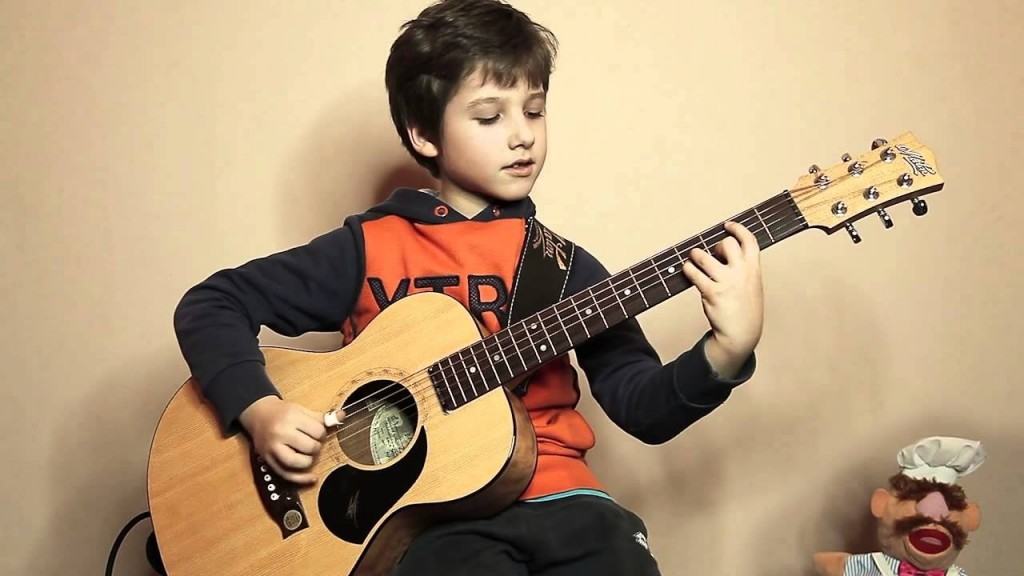
Mastering Blues Shuffle Strumming Pattern
Shuffle rhythm defines blues feel more than chord choices alone. This pattern emphasises the first and third beats while de-emphasising beats two and four. Count “one-and-a-two-and-a-three-and-a-four-and-a” with emphasis on numbered beats.
Start with quarter-note strums on each beat, then progress to eighth-note patterns. Classic shuffle uses long-short, long-short timing rather than even eighth notes. This creates the characteristic “swing” feel that distinguishes blues from rock music.
Use a light touch with pick, allowing some strings to ring while others remain muted. This technique creates the rhythmic complexity that makes simple chords sound sophisticated. Before you worry about buying essential rock guitar pedals to change your tone, focus on getting this rhythm right with your hands. Practice with recordings by Stevie Ray Vaughan or Eric Clapton for authentic reference material.
Starting Blues Rhythm Guitar: Lessons from PrivateGuitarLessons, Chuyên Private Guitar Lessons Tại New York City
Professional instruction accelerates learning by correcting technical problems early. Many self-taught players develop timing issues or inefficient fingerings that limit future progress. Our instructors identify these problems immediately, preventing months of frustration.
Private lessons allow customised learning paths based on individual goals and musical preferences. Some students prefer acoustic fingerstyle blues, while others gravitate toward electric rock applications. We adapt our teaching methods to match each student’s interests and learning style.
New York City’s diverse music scene provides endless inspiration for blues study. From intimate clubs in Greenwich Village to larger venues in Brooklyn, live blues performances offer practical examples of twelve-bar progressions in action. If you are serious about learning, taking blues guitar lessons nyc style is one of the best ways to immerse yourself in this rich musical tradition.

Common Variations of the 12 Bar Blues Progression
Professional musicians rarely play basic progression without modifications. These variations maintain the essential harmonic movement while adding sophistication and interest. Understanding common alternatives prepares guitarists for real-world playing situations.
Adding “Flavour” with Quick Change (Quick to Four)
Quick change variation moves to IV chord in measure 2 instead of staying on I chord. This creates earlier harmonic motion and builds momentum from the beginning of each cycle. The pattern becomes: I-IV-I-I-IV-IV-I-I-V-IV-I-V.
This change works particularly well in faster tempos where extended stays on single chords might feel static. Many rock and jump blues songs employ this variation as standard practice. Artists like Chuck Berry frequently used quick changes in their compositions.
Early harmonic movement requires more precise timing from rhythm guitarists. Practice transition from I to IV smoothly, maintaining consistent strumming patterns throughout the chord change. This variation demonstrates how small modifications can significantly alter a progression’s character.
Dominant Seventh Chords (Making it Sound More ‘Bluesy’)
Dominant seventh chords add harmonic tension that defines authentic blues sound. These chords contain flatted seventh scale degree, creating dissonance that resolves satisfyingly to next chord. Replace major triads with dominant sevenths throughout the progression.
A7: Use open A major shape, but lift your third finger from the B string’s 2nd fret. This creates the characteristic seventh interval.
D7: From open D major, lift your third finger and place your fourth finger on D string’s 3rd fret.
E7: Open E major chord already functions as E7 when played in standard tuning.
These voicings create gritty, earthy sound associated with traditional blues. Additional tension notes provide perfect launching points for melodic phrases and improvisation. Professional blues players consider dominant seventh chords essential rather than optional.

Exploring Minor 12 Bar Blues
Minor blues progressions use minor chords instead of major ones, creating darker, more introspective moods. Pattern becomes i-i-i-i-iv-iv-i-i-v-iv-i-v, using lowercase Roman numerals to indicate minor quality.
A minor: Place your first finger on B string’s 1st fret, second finger on D string’s 2nd fret, and third finger on the G string’s 2nd fret.
D minor: First finger goes on high E string’s 1st fret, second finger on G string’s 2nd fret, and third finger on the B string’s 3rd fret.
E minor: Second and third fingers occupy A and D strings’ 2nd frets respectively.
Minor blues appears frequently in jazz and contemporary music. Artists like Carlos Santana and Joe Bonamassa regularly employ minor progressions for emotional depth. This variation expands harmonic vocabulary beyond major-key limitations.
Your First Steps to Soloing Over the 12 Bar Blues
Improvisation transforms guitarists from chord players into complete musicians. The twelve-bar progression provides an ideal framework for developing soloing skills. Its repetitive nature allows practice of melodic ideas across multiple cycles.
The Best Scales for Blues Improvisation (Pentatonic Major vs. Minor)
The A minor pentatonic scale (A-C-D-E-G) works perfectly over twelve-bar blues in A major. This five-note scale eliminates potential clash notes while providing expressive melodic material. Practice this scale across multiple octaves and fretboard positions.
The A major pentatonic scale (A-B-C#-E-F#) offers a brighter, more optimistic sound. Many country and rock guitarists prefer major pentatonic for its cheerful character. Both scales work simultaneously, allowing mixture within single solos.
Professional blues players often combine both scales strategically. Minor pentatonic phrases create tension and emotion, while major pentatonic phrases provide resolution and brightness. This combination technique defines advanced blues soloing.
Start with simple quarter-note melodies using just three or four scale notes. Gradually increase complexity as comfort with the progression develops. Remember that space between notes often proves more important than the notes themselves.
Simple Techniques for Creating a Melodic Line
Begin solos with the root note (A) played on beat one of measure one. This establishes the tonal centre clearly before exploring other scale degrees. Simple repetitive phrases work better than complex runs for beginning improvisers.
Use bending techniques to add emotional expression to basic scales. Bend the minor third (C) up to the major third (C#) for authentic blues flavour. This technique bridges the gap between minor and major pentatonic scales naturally.
Practice call-and-response phrases where you play a short melodic idea, then “answer” it with a related phrase. This conversational approach mirrors vocal blues traditions and acts as a foundation when learning how to jam on guitar collaboratively with other musicians.

Improvisation Help: Contact PrivateGuitarLessons, Chuyên Private Guitar Lessons Tại New York City
Developing improvisational skills requires guidance from experienced teachers who understand common pitfalls and effective practice methods. Our instructors have performed professionally throughout New York’s competitive music scene, bringing real-world experience to every lesson.
Private instruction allows immediate feedback on timing, note choice, and phrasing that group classes cannot provide. Students progress faster when mistakes are corrected immediately rather than reinforced through repetition. Our personalised approach ensures each student develops their unique musical voice.
Whether you live in busy Manhattan where practice time is limited, or in quieter Brooklyn neighbourhoods with more space, we bring professional instruction directly to your location. No more carrying guitars through crowded subway systems or fighting traffic to reach music schools.
Looking for personalised guitar instruction in NYC? At PrivateGuitarLessons, we bring the music school to your living room. Whether you are a beginner looking to strum your first chord or an advanced player refining your jazz improvisation, we offer the best private guitar nyc has to offer. Contact us today to start your musical journey with New York’s most convenient guitar lesson service.
