

Music education transcends melodies, alongside rhythms. Research demonstrates that children who engage in musical training experience profound cognitive, emotional, plus academic advantages. These benefits extend far beyond the practice room, shaping young minds for lifelong success.
Children who participate in music programs show remarkable improvements in brain function, academic performance, as well as social skills. The transformation begins within days of starting lessons and deepens with continued study.

How Music Education Primes Your Child’s Brain for Learning
Music acts like brain training for children. When young musicians learn instruments, their brains undergo measurable changes that enhance cognitive abilities across multiple domains.
Enhanced Cognitive Skills and Increased IQ
Research by Glenn Schellenberg at the University of Toronto reveals striking results. Six-year-olds who received weekly piano and voice lessons showed average IQ increases of three points compared to control groups. This improvement occurred after just nine months of instruction. Even when considering guitar lessons for 5 year old beginners, parents often observe similar leaps in developmental milestones.
Musicians’ brains demonstrate increased neural activity compared to non-musicians. Children engaged in musical training show larger growth patterns in brain regions responsible for processing; cognition is also enhanced. When playing instruments, young musicians activate multiple brain areas simultaneously, strengthening neural pathways.
Brain imaging studies confirm these changes. Children who received 15 months of weekly music instruction showed enhanced sound discrimination abilities, besides improved fine motor task performance. The networks in their brains associated with these skills physically changed.
Boosting Spatial-Temporal Reasoning
Music instruction reliably improves spatial-temporal skills in children over time. Spatial intelligence allows children to visualize elements that work together, crucial for mathematics and problem-solving.
This connection between music and spatial reasoning helps children understand how different components fit together. They develop stronger abilities to mentally manipulate objects and understand complex patterns. These skills transfer directly to mathematical concepts and scientific thinking.
Children who study music demonstrate better performance on tasks requiring spatial visualization. They can more easily grasp geometric concepts, architectural principles, in addition to engineering fundamentals.
Improving Language Development
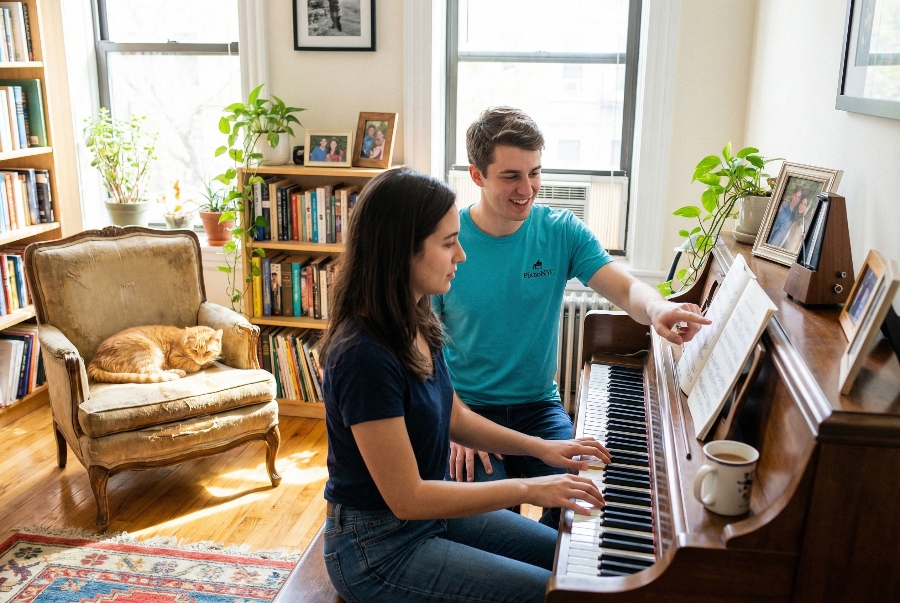
Musical training physically develops the left brain hemisphere responsible for language processing. The brain wires specific circuits that enhance verbal abilities when children engage with music regularly.
Language competence forms the foundation of social competence. Musical experience strengthens the capacity for verbal communication. Children in music programs show enhanced vocabulary development, improved pronunciation accuracy, and stronger reading comprehension.
Research indicates that musical training and language development share neural pathways. Children who study music often excel in second language acquisition and demonstrate superior phonological awareness.
The Link Between Musical Training and Academic Success
Academic achievement correlates strongly with musical education. Students involved in music programs consistently outperform peers in standardized assessments across multiple subjects.
Higher Scores in Math and Reading Tests
A study of 5,154 fifth-graders found that children learning instruments received higher marks than classmates without musical training. Students with longer musical training showed progressively higher academic scores.
A comprehensive 10-year study of over 25,000 students revealed consistent patterns. Regardless of socioeconomic background, music-making students achieved higher standardized test scores than non-musical peers. This advantage persisted across diverse demographic groups.
The concentration required for musical training mirrors the focus needed for standardized test success. Children who practice instruments develop sustained attention abilities that transfer to academic situations.
Cultivating Discipline, Including Time Management Skills
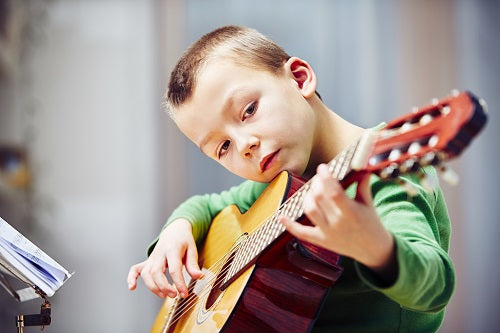
Music education teaches children essential life skills beyond musical knowledge. Regular practice schedules instill discipline including time management habits that benefit all areas of life.
Young musicians learn to break complex tasks into manageable segments. They develop patience through repetitive practice, plus perseverance when facing challenging pieces. These skills directly transfer to academic subjects and personal projects.
Students in music programs often demonstrate superior organizational abilities. They learn to balance practice time with other commitments, developing crucial scheduling skills for future academic and professional success.
Developing Fine Motor Skills and Coordination
Learning instruments requires precise finger movements and hand-eye coordination. Children develop remarkable dexterity through musical practice that enhances their overall motor abilities.
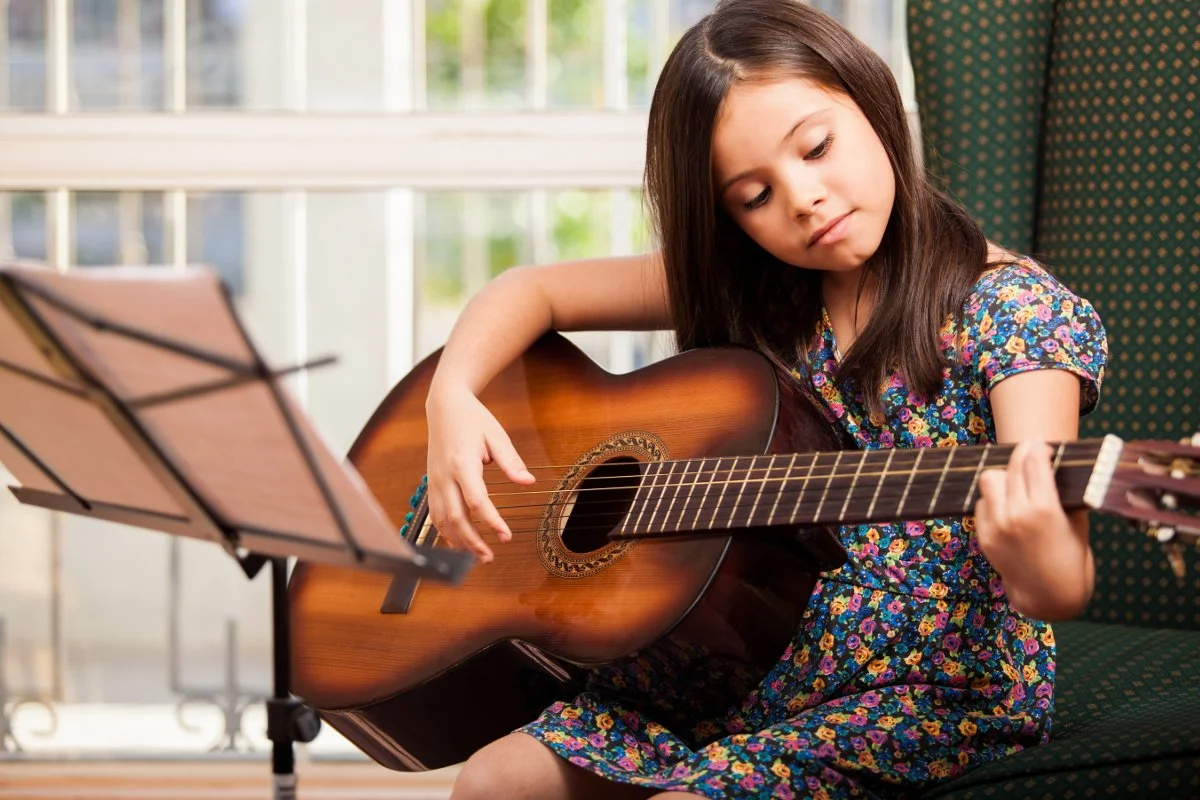
Guitar playing specifically strengthens finger independence and bilateral coordination. Our instructors often incorporate fun ways to learn guitar chords to help students coordinate both hands performing different tasks simultaneously. This skill development improves handwriting, typing abilities, and other fine motor tasks.
Musical training also enhances gross motor skills through rhythm and movement activities. Children develop better balance, timing, and physical awareness through musical engagement.
Nurturing Emotional Intelligence and Social Skills Through Music
Music education profoundly impacts emotional and social development. Children who participate in musical activities demonstrate enhanced emotional regulation and stronger interpersonal skills.
Strengthening Emotional Well-being and Mental Health
Music provides a secure environment for emotional expression. Children often lack verbal skills to express complex feelings, but music offers an alternative outlet for emotional communication.
Students in music programs show reduced anxiety levels and improved mood regulation. The act of creating music releases endorphins and reduces stress hormones, promoting mental wellness and highlighting the psychological benefits of playing guitar and other instruments.
Research by the Bernard van Leer Foundation demonstrates that musical activities in early childhood reduce parental anxiety and strengthen parent-child bonding. These early musical experiences create lasting emotional benefits.
Building Community and Cultural Appreciation
Group musical activities foster cooperation, teamwork, and leadership skills. Whether in choirs, bands, or informal sessions, children learn to work together toward common goals.
Students develop active listening abilities through ensemble participation. They must listen to their own performance while remaining aware of the group’s overall sound. This skill enhances communication abilities and social awareness.
Music education exposes children to diverse cultural traditions and artistic expressions. Students gain appreciation for different musical styles, historical periods, and cultural perspectives, broadening their worldview.
Enhancing Creativity and Self-Expression
Musical training unlocks creative potential in children. Students learn to interpret pieces personally while respecting compositional intentions. This balance between structure and creativity applies to many life situations.
Children in music programs demonstrate enhanced problem-solving abilities. They learn multiple approaches to technical challenges and develop innovative solutions. This creative thinking transfers to academic subjects and personal endeavors.
Musical expression builds confidence and self-esteem. Children experience accomplishment through performance and gain comfort with public presentation skills.
Starting Your Child’s Musical Journey: Private Guitar Lessons in New York City
PrivateGuitarLessons brings expert musical instruction directly to your NYC home. Our qualified instructors eliminate commuting hassles while providing personalized attention your child deserves.
We understand the unique challenges New York families face. Busy schedules, crowded subway systems, and limited practice space create obstacles to traditional music education. Our in-home approach solves these problems while delivering superior instruction quality.
Our teachers undergo comprehensive background checks and possess extensive musical education credentials. Each instructor tailors lesson plans to your child’s interests, learning style, and goals. Whether your child gravitates toward rock, jazz, folk, or you are specifically seeking classical guitar lessons nyc, we match them with appropriate specialists.
No more dragging guitar cases through Manhattan crowds or missing lessons due to weather delays. Our instructors arrive punctually at your door with professional equipment and structured curricula designed for rapid progress.
Why PrivateGuitarLessons is the Right Choice for Your Child’s Music Education
We combine the convenience of home instruction with the expertise of conservatory-trained professionals. Our students typically master their first song within four lessons, building confidence and motivation for continued learning.
Each lesson incorporates age-appropriate techniques and music theory concepts. Parents who have read a suzuki method guitar review might wonder about the best approach; our teachers are skilled in various methods and adapt to what works best for your child. Young students enjoy engaging activities that build foundational skills.
Older students explore advanced techniques and composition principles that prepare them for lifelong musical enjoyment.
Our flexible scheduling accommodates busy NYC lifestyles. Lessons occur seven days per week, fitting around school, extracurricular activities, and family commitments. We adapt to your family’s changing needs throughout the musical journey.
Looking for personalized private guitar lessons in NYC? At PrivateGuitarLessons, we bring the music school to your living room. Whether you are a beginner looking to strum your first chord or an advanced player refining your jazz improvisation, our expert instructors are here to help.
No more commuting with your guitar on the crowded NYC subway – We come to you. Customized lesson plans fit your musical taste and goals, ensuring rapid progress and lasting enjoyment.
Frequently Asked Questions (FAQs) About Music Education
What are the cognitive benefits of music education for children?
Music education acts as powerful brain training, enhancing a child’s cognitive abilities significantly. Key benefits include increased IQ, as studies by researchers like Glenn Schellenberg show that six-year-olds receiving weekly piano or voice lessons can experience an average IQ increase of three points. It also fosters enhanced spatial-temporal reasoning, improving a child’s ability to visualize elements and understand complex patterns, which is critical for excelling in mathematics and problem-solving. Furthermore, musical training strengthens the left brain hemisphere, leading to enhanced vocabulary development, superior phonological awareness, and better reading comprehension.
How does musical training impact a child’s academic success?
Students involved in musical training consistently achieve higher academic scores than their non-musical peers. The skills developed through music directly transfer to the classroom, resulting in higher test scores, particularly in math and reading standardized tests. The concentration required for musical practice develops sustained attention, a crucial skill for test-taking and academic focus. Additionally, regular practice instills essential life skills like discipline, perseverance, and the ability to organize complex tasks into manageable segments.
Can music lessons really improve a child’s emotional well-being?
Absolutely. Music education is a powerful tool for nurturing emotional intelligence and mental health. It provides a secure environment for emotional expression, acting as an alternative outlet for children who may lack the verbal skills to communicate complex feelings. The act of creating music promotes mental wellness by reducing anxiety levels, improving mood regulation, releasing endorphins, and reducing stress hormones. It also helps in strengthening parent-child bonding through shared musical activities.
Contact Information:
– PrivateGuitarLessons
– Address: 230 Suydam St, Brooklyn, NY 11237, USA
– Phone: +1 646 269 7303
– Website: privateguitarnyc.com
– Email: [email protected]
