

Starting your guitar journey requires choosing between two fundamental instrument types: acoustic or electric guitars. This decision significantly impacts your learning experience, skill development trajectory, as well as musical preferences. Experts in private guitar instruction NYC guide thousands of students through this crucial choice annually.
Is It Easier to Learn on Acoustic or Electric Guitar?
Electric guitars demonstrate easier playability for beginners due to lower string tension, resulting in reduced finger pressure requirements. Students typically develop chord formations 30-40% faster on electric instruments compared to acoustic alternatives.
Acoustic guitars demand stronger finger strength but build superior hand coordination, coupled with muscle memory. However, for those struggling with finger pain, electrics can be the route to mastering easy guitar chords for beginners before transitioning to tougher instruments.
The learning curve varies based on musical goals:
- Rock, metal, or blues styles favor electric guitar foundation
- Folk, country, alongside classical genres benefit from acoustic training
- Jazz and fingerstyle techniques thrive on both instrument types


Key Differences Between Acoustic and Electric Guitars
String Tension Versus Finger Pain
Electric guitars feature significantly lower string action (distance between strings and fretboard), reducing finger fatigue by approximately 50% during practice sessions. Medium gauge strings on electric instruments require 2-3 pounds of pressure per fret, while acoustic guitars demand 4-6 pounds of pressure.
Acoustic guitars utilize heavier gauge strings that create higher tension across the neck. This increased resistance builds finger strength more rapidly but causes initial discomfort for 2-4 weeks. PrivateGuitarLessons students typically experience callus formation within 10-14 practice sessions on acoustic instruments.
Body Size, Weight, and Portability
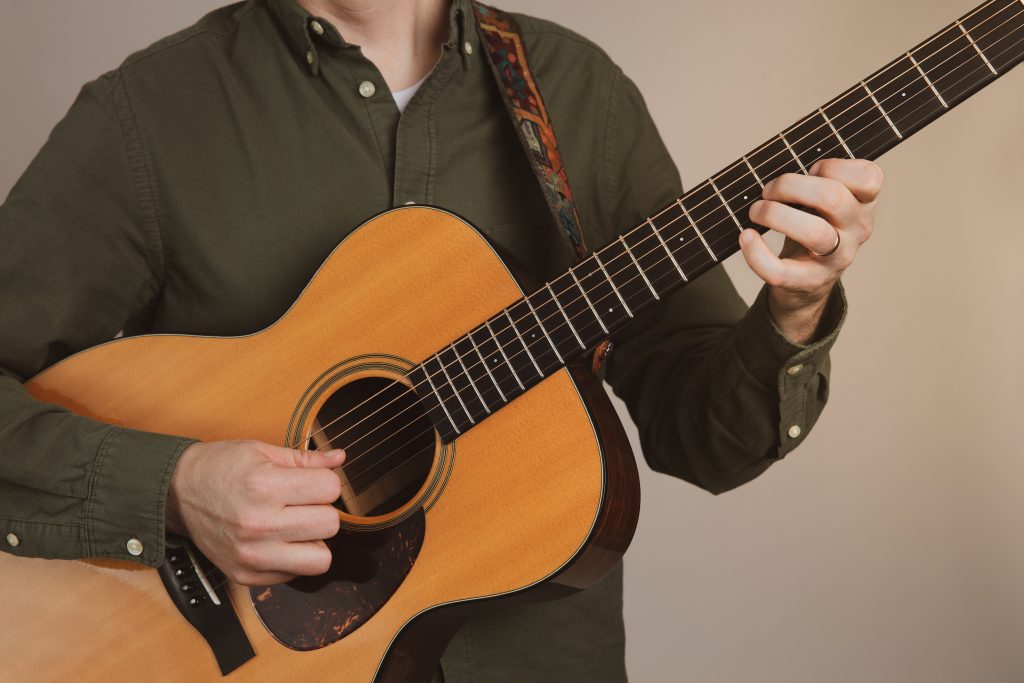
Acoustic guitars measure 39-41 inches in length with body depths of 4-5 inches, weighing 3-6 pounds depending on wood construction. Full-size dreadnought models present challenges for smaller-framed players, including children under 12 years.
Electric guitars feature thinner solid bodies (1.5-2 inches), yet they weigh 6-9 pounds including hardware. The compact design accommodates various playing positions but requires amplification equipment for audible practice.

Sound Projection and Volume Control
Acoustic instruments project natural sound through hollow body resonance, producing 85-95 decibels at normal playing intensity. This natural amplification eliminates equipment dependency but limits volume control options.
Electric guitars generate minimal acoustic sound (40-50 decibels) without amplification. Volume control ranges from whisper-quiet headphone practice to concert-level performance through amplifier adjustment. This versatility benefits apartment dwellers and late-night practice sessions.
Pros and Cons of Starting on an Acoustic Guitar
Benefits: Simplicity and Lower Upfront Cost
Acoustic guitars require minimal additional equipment beyond the instrument itself. Entry-level models start at $150-300; in fact, finding the best acoustic guitar under 300 is quite feasible for a quality start. Quality student instruments range $300-600. No amplification, cables, or effects pedals are necessary for immediate practice.
The self-contained nature promotes focused learning without technological distractions. Students develop pure musical skills including rhythm, timing, as well as tonal expression through direct physical interaction with the instrument.
Benefits: Building Stronger Hands for PrivateGuitarLessons
Higher string tension creates superior finger strength, alongside dexterity development. Students who begin with acoustic instruments demonstrate 25% stronger fretting hand grip strength after 6 months compared to electric-only learners.
The demanding physical requirements improve chord transitions, barre chord execution, resulting in overall fretboard navigation. PrivateGuitarLessons instructors utilize this strength foundation to accelerate advanced technique development in subsequent lessons.
Drawbacks: Higher Action and Difficulty with Bar Chords
Standard acoustic setup features string action 2-3mm higher than electric guitars, creating significant challenges for beginner chord formations. Bar chords (F major, B minor) require substantial finger pressure that discourages many new students within the first month.
The wider neck profile, leading to increased string spacing demand greater finger stretches for chord shapes. Students with smaller hands may struggle with basic open chords (G major, C major) that form the foundation of popular music.

Pros and Cons of Starting on an Electric Guitar
Benefits: Easier Playability and Neck Profiles
Electric guitar necks feature narrower profiles (1.625-1.75 inches), featuring lower string action that accommodates smaller hands and reduces physical strain. Beginning students achieve clean chord sounds 40-50% faster due to reduced pressure requirements.
The thin neck design facilitates rapid chord changes. It allows students to learn electric guitar fretboard patterns more intuitively, coupled with single-note melodies essential for rock and blues styles. PrivateGuitarLessons students demonstrate improved motivation and practice consistency when physical barriers are minimized.
Benefits: Versatility in Rock, Blues, or Jazz Genres
Electric guitars access extensive tonal variety through amplifier settings, effects pedals, and pickup configurations. Students explore clean jazz tones, overdriven blues sounds, and high-gain rock distortion within single practice sessions.
This sonic flexibility maintains student engagement, thus supporting diverse musical exploration. The ability to emulate favorite artists’ sounds enhances motivation, which accelerates style development across multiple genres.
Drawbacks: Need for Amps and Cables
Electric guitar practice requires amplification equipment that increases initial investment by $200-500. Basic practice amplifiers (10-15 watts) suffice for home use, while larger venues demand more powerful systems.
Cable connections, amplifier settings, alongside potential equipment failures introduce technical complications that can interrupt practice flow. Students must develop basic troubleshooting skills alongside musical proficiency.
Price Comparison: What Gear Do You Need?
Acoustic Guitar Startup Costs:
- Quality beginner instrument: $300-600
- Guitar case or gig bag: $50-150
- Basic accessories (picks, tuner, strap): $30-50
- Total initial investment: $380-800

Electric Guitar Startup Costs:
To keep costs down, looking for the best starter electric guitar pack is often a smart move.
- Beginner electric guitar: $250-500
- Practice amplifier (10-15 watts): $100-200
- Instrument cable: $20-40
- Guitar case or gig bag: $50-150
- Basic accessories (picks, tuner, strap): $30-50
- Total initial investment: $450-940
Long-term costs favor acoustic guitars due to minimal maintenance requirements, due to the absence of electronic components. Electric setups may require amplifier servicing, cable replacement, plus pickup adjustments over time.
Choosing the Right Instrument for Private Lessons in New York City
PrivateGuitarLessons customizes instrument recommendations based on individual student goals, physical attributes, as well as living situations. Manhattan apartment dwellers benefit from electric guitars with headphone capabilities for noise-conscious practice.
Students pursuing singer-songwriter styles, folk music, or classical techniques achieve faster progress with acoustic instruments. The natural projection supports vocal accompaniment without additional equipment complexity.
When buying first acoustic guitar or electric instrument, consider these factors:
- Available practice space, including noise restrictions
- Musical genre preferences, coupled with long-term goals
- Physical comfort, alongside hand size compatibility
- Budget constraints, including the upgrade timeline
- Lesson scheduling flexibility with equipment transport
Final Recommendation from PrivateGuitarLessons Experts
Begin your musical journey with the instrument that aligns with your specific goals or circumstances. Electric guitars offer easier physical playability, coupled with genre versatility, while acoustic instruments build fundamental strength and require minimal equipment investment.
PrivateGuitarLessons instructors recommend electric guitars for students interested in rock, blues, or jazz styles who have dedicated practice spaces. Acoustic guitars suit aspiring singer-songwriters, folk musicians, or students with noise-sensitive living situations.
Both instrument types develop essential musical skills including chord progressions, rhythm patterns, as well as melodic expression. The most important factor is consistent practice, along with quality instruction rather than the specific instrument choice.
Schedule your complimentary consultation with PrivateGuitarLessons to determine the optimal instrument for your musical aspirations. Our experienced New York City instructors provide personalized guidance that accelerates your learning progress regardless of your starting instrument.
Frequently Asked Questions
Can I switch between acoustic and electric guitars later?
Yes, switching between acoustic or electric instrument types is easy after you develop basic skills. The fundamental chord shapes, scale patterns, plus music theory principles transfer directly. PrivateGuitarLessons students often expand their collection to include both instruments within 6-12 months of starting lessons.
Do I need different lessons for acoustic vs electric guitar?
No, you do not need different lessons for the core concepts. The musical concepts remain identical. Technique differences (amplifier operation, effects usage, along with genre-specific approaches) are adapted by experienced instructors within standard lesson formats. PrivateGuitarLessons curriculum accommodates both instruments seamlessly.
Which guitar type is better for children?
Electric guitars often suit children better due to easier playability and lower string tension. However, 3/4 size acoustic guitars provide excellent alternatives. The decision depends on the child’s musical interests, physical development, as well as practice environment. PrivateGuitarLessons offers specialized youth programs for both instrument types.
